


ISSN : 0976-8920
EISSN : 0976-8939



NARWADE S.S.1*
1Department of Economics, Dr. Babasaheb Ambedkar Marathwada University, Aurangabad- 431004, MS, India.
* Corresponding Author : ssnarwade22@gmail.com
Received : 01-07-2013 Accepted : 16-07-2013 Published : 22-07-2013
Volume : 4 Issue : 1 Pages : 104 - 107
J Crop Sci 4.1 (2013):104-107
DOI : http://dx.doi.org/10.9735/0976-8920.4.1.104-107
Conflict of Interest : None declared
The present study is an attempt to find out state-wise growth performance of pulses during the pre and post reform period in India. The pulses crops which are considered for the analysis are gram, arhar, and category of ‘other pulses’. The gram and arhar alone constitutes half of the area under pulses cultivation. The pulses performance during the last three decades is evaluated on the basis of estimates of compound annual growth rates and coefficients of variation in area, production and yields per hectare at all-India and state level. The study showed that gram and arhar output growth have registered an increase during the post and later post reform period, mainly due to area expansion at all-India level. Maharashtra, Rajasthan and Madhya Pradesh have improved gram output performance during the later post reform period, mainly due to area expansion. The states of Gujarat, Jharkhand, Karnataka and Orissa have registered remarkable performance of arhar output growth during the period 2001-02 to 2006-07.
Pulses Production, Pulses Growth, Pulses Instability.
Most of the production expansion in pulses came from dry states and the decline in production in production came from dry states. Positive growth of area as well as yield in both the seasons occurred mostly in dry areas [1] . Chopra [2] showed that during 1950-51 to 1976-77, in states where pulses production has declined, the area under pulses has registered a decline too. States, which largely indicated this trend, were Haryana, Punjab, Uttar Pradesh, Bihar and to some extent West Bengal. In recent years there are very few studies which focused on the performance of pulses production. The present study is an attempt to find out growth performance of pulses during the last three decade.
The present study is based on purely secondary data. The secondary data about area, yield and production of pulses in major states by production are collected for the period from 1981-82 to 2006-07. In order to present and analyze the growth and instability, this entire period has been divided into three sub-periods viz; 1981-82 to 1990-91, Period I as pre-reform period, 1991-92 to 2000-01, Period II as post-reform period, and 2001-02 to 2009-07, period III as a later post-reform period. The purpose of dividing the entire period into three sub-periods is to examine growth and variations after 1991 reforms and compare it with pre-reform period.
The required secondary data is collected from India’s agricultural sector, Centre for Monitoring Indian Economy (CMIE), Mumbai [3] . The present study analyses state-wise growth performance of pulses is analyzed. The pulses crops which are considered for the analysis are gram, arhar, and category of ‘other pulses’. The gram and arhar alone constitutes half of the area under pulses cultivation [4] .
The pulses performance is evaluated on the basis of estimates of compound annual growth rates and coefficient of variation in area, production and yields per hectare at all-India and state level.
In case of gram, both output growth and output instability has increased at all-India level, during the post-reform period over pre-reform period. Gram output growth has increased from -0.51% during the pre-reform period to 1.19% during the post-reform period at all-India level, mainly due to the growth in yield per hectare. It further increased to 4.40% per annum during 2001-02 to 2006-07. Output instability in gram has marginally increased during the later post-reform period, at all-India level.
At the disaggregate level, gram output growth and output instability have greatly accelerated in the states of Karnataka and West Bengal during the post-reform period over pre-reform period but thereafter recorded dismal performance during 2001-02 to 2006-07. A far greater contribution to output growth of gram has come from area component than yield component in these states during the post-reform period. In the state of Karnataka output instability in gram has increased from low (21.09%) during the pre-reform period to high (37.18%) during the post-reform period and from 33.14% during the pre-reform period to 51.23 during the post-reform period in Rajasthan. During the later post reform period Karnataka and West Bengal failed to maintain high gram output growth, but in the state of Rajasthan (5.75%) gram output growth accelerated during the later post-reform period [Table-1] .
Bihar, Haryana, were the states where output growth of gram has significantly decelerated but the output instability has increased during the post-reform period over pre-reform period. Steep fall in area under gram was mainly responsible for negative trend in output growth of gram in these states during the post-reform period. Both these states registered negative growth rates during 2001-02 to 2006-07 with low gram output instability.
In the state of Uttar Pradesh, pace of gram output growth decline has significantly increased and output instability has registered rise during the post-reform period and later post reform period over pre-reform period. Output instability in gram was observed to be low in Uttar Pradesh during these periods.
Madhya Pradesh was the state where gram output growth was almost same during both the periods, but output instability in gram has increased from 11.38% during the pre-reform period to 19.71% during the post-reform period. Gram output increased to 4.5% per annum during the period 2001-02 to 2006-07.In the state Maharashtra output growth has greatly accelerated and the output instability in gram has decreased during the post-reform period over pre-reform period. In the state of Maharashtra area component was the dominant source of output growth of gram during the post-reform period. Gram output has further increased at the rate of 15.0% during the later post-reform period.
In the state of Chhattisgarh, gram output growth has significantly decelerated from 7.80% during the pre-reform period to -5.80% during the post-reform period and -0.83% during 2001-02 to 2006-07 due to significant decline in both area and yield growth rate. But output instability in gram has marginally decreased from 25.64% during the pre-reform period to 23.06% during the post-reform period.
In case of arhar, output growth has decelerated and output instability has increased at all-India level, during the post-reform period over pre-reform period. Though the yield growth rate has marginally increased from 0.52% during the pre-reform period to 0.75% during the post-reform period, decline in area growth rate from 2.21% during the pre-reform period to -0.20% during the post-reform period led to arhar output growth deceleration during the post-reform period over pre-reform period. During 2001-02 to 2006-07 arhar output picked up to 2.25% per annum, mainly due to area expansion. Output instability in arhar was observed to be low during all the sub-period at all-India level.
At the disaggregate level, in the states of Andhra Pradesh, Karnataka, Maharashtra, output growth and output instability in arhar has accelerated during the post-reform period over pre-reform period. Later during period III, only Karnataka state registered high arhar output growth, whereas in Maharashtra and Andhra Pradesh arhar output growth has decelerated. In the states of Andhra Pradesh and Karnataka, output instability in arhar has registered significant increase from low during the pre-reform period to high during the post-reform period.
The state of Bihar has registered the acceleration in output growth and decrease in output instability in arhar during the post-reform period over pre-reform period. In this state output instability in arhar was observed to the lower during the post-reform period over pre-reform period. During the period III output instability in arhar in Maharashtra and Andhra Pradesh declined whereas Karnataka registered high output instability.
States of Gujarat, Tamil Nadu have registered significant deceleration in output growth and output instability in arhar during the post-reform period over pre-reform period. Output growth has declined from 1.76% to -4.61% in Gujarat, from 7.33% to -4.47% in Tamil Nadu, during the first two sub-periods. Decline in area was the major factor responsible for negative output growth of arhar in the state Tamil Nadu during the post-reform period [Table-2] .
In the state of Gujarat yield per hectare played major role in output growth decline during the post-reform period. During period III the pace of output decline increased in Tamil Nadu (-11.26%), whereas Gujarat (2.20%) registered high growth rate in arhar output. In the state of Tamil Nadu, output instability in arhar has declined from 30.30% during the pre-reform period to 22.46% during the post-reform period.
Arhar output growth has decelerated but output instability has increased during the post-reform period over pre-reform period, in the states of Madhya Pradesh and Orissa. In the state Orissa, much faster decline in yield per hectare than area and in Madhya Pradesh decline in area led to negative trend in output growth of arhar during the post-reform period. Orissa arhar production recorded comeback during the later post reform period with growth of 6.7%.
In the state of Uttar Pradesh, arhar output has declined at the same rate (-0.88%) during both the periods and output instability in arhar was relatively lower during all the sub-periods. In the state of Uttar Pradesh, though yield per hectare has increased at the rate of 2.13%, significant decline in area at the rate of -2.96% led to negative trend in output growth of arhar, during the post-reform period. The pace of arhar output decline has increased in Uttar Pradesh (-7.24%) during the later post reform period.
Output growth of other pulses has significantly decelerated from 3.26% during the pre-reform period to -1.32% during the post-reform period, at all-India level. This negative growth rate continued in other pulses during period III as well. Both area and yield growth rates have significantly declined during the post-reform period over pre-reform period, at all-India level. Output instability in other pulses was observed to be low during all the sub-periods at all-India level. At the disaggregate level, the states of Rajasthan and Tamil Nadu have registered significant decline in both output growth and output instability in other pulses during the post-reform period over pre-reform period. In the state of Rajasthan output growth of other pulses has declined from 4.69% during the pre-reform period to -2.06% during the post-reform period, thereafter significantly increased to 3.55% during period III, due to area expansion.
In Tamil Nadu other pulses output growth has decreased from 10.10% during the pre-reform period to -0.42% during the post-reform period. In Tamil Nadu decline in area and yield per hectare both were responsible for negative output growth of other pulses during sub-period III. Output instability in other pulses was high in the state of Rajasthan and medium in Tamil Nadu during the period under study.
In the state of Gujarat, the pace of output growth decline was slowed down during the post-reform period over pre-reform period. During sub-period III also Gujarat registered negative output growth of -2.02%. Output instability in other pulses has decreased from high 48.95% during the pre-reform period to high 38.37% during the post-reform period and further to 32.43% during 2001-02 to 2006-07.
In the states of Andhra Pradesh and Maharashtra other pulses output growth has registered significant deceleration, and output instability has increased during the post-reform period over pre-reform period. Significant decline in area was mainly responsible for negative trend in output growth in the states of Andhra Pradesh during the post-reform period. During sub-period III, other pulses output has further declined and registered negative growth, mainly due to area decline. During 2001-02 to 2006-07 other pulses output growth in West Bengal (1.09%) improved, mainly due to increase in yield per hectare. In the state West Bengal, output instability in other pulses was observed to be low during all the sub-periods.
In the state of Karnataka and Orissa other pulses output has declined significantly during the post-reform period. Much faster decline in area than yield per hectare led to significant decline in output growth of other pulses in these states during the post-reform period. Output instability in other pulses has significantly increased form low (21.65%) during the pre-reform period to high (91.61%) during the post-reform period in the state of Orissa, it declined to 25.27% during later post reform period. High area instability was the major component of high output instability in other pulses during the post-reform period in Orissa. During sub-period III in the state of Karnataka other pulses output growth improved to 1.67% per annum. The state of Orissa (6.01%) has registered high output growth during this period, mainly due to area expansion. Output instability in other pulses has declined in Orissa and Karnataka during this period [Table-3] .
The study showed that gram and arhar output growth have registered an increase during the post and later post reform period, mainly due to area expansion at all-India level. The category of other pulses which registered negative output growth during post reform period, continued with the negative output growth during later post reform period., mainly due to decline in yield per hectare at all-India level. Output instability in gram has marginally increased during the later post-reform period, at all-India level whereas output instability in arhar was observed low during the last three decades.
Maharashtra, Rajasthan and Madhya Pradesh have improved gram output performance during the later post reform period, mainly due to area expansion. The states of Gujarat, Jharkhand, Karnataka and Orissa have registered remarkable performance of arhar output growth during the period 2001-02 to 2006-07. In all these states except Jharkhand yield per hectare played dominant role in arhar output increase.
[1] Sadasivan S. (1989) Economic and Political Weekly, XXIV(51), A167-A180.
» CrossRef » Google Scholar » PubMed » DOAJ » CAS » Scopus
[2] Chopra K. (1982) Indian Journal of Agricultural Economics, XXXVII(4), 371-380.
» CrossRef » Google Scholar » PubMed » DOAJ » CAS » Scopus
[3] Centre for Monitoring Indian Economy (2005-2009) Growth Rates and Coefficients of Variation are estimated on the basis of data collected from ‘India’s Agricultural Sector, Mumbai, India.
» CrossRef » Google Scholar » PubMed » DOAJ » CAS » Scopus
[4] Government of India (2012) Handbook of Agricultural Statistics, Department of Agriculture and Cooperation, Ministry of Agriculture, New Delhi, India.
» CrossRef » Google Scholar » PubMed » DOAJ » CAS » Scopus
[5] Bhatia M.S. (1981) Agricultural Situation in India, XXXVI(5), 379-384.
» CrossRef » Google Scholar » PubMed » DOAJ » CAS » Scopus
[6] Jain H.K. and Singh D. (1984) Agricultural Situation in India, XXXVIII(10), 623-627.
» CrossRef » Google Scholar » PubMed » DOAJ » CAS » Scopus
[7] Srinivasan T.N. (1979) Economic and Political Weekly, XIV(30 & 32).
» CrossRef » Google Scholar » PubMed » DOAJ » CAS » Scopus
[8] Shishir Sinha (2013) Duty Free Imports of Pulses Extended for a Year, Business Line, March 13.
» CrossRef » Google Scholar » PubMed » DOAJ » CAS » Scopus
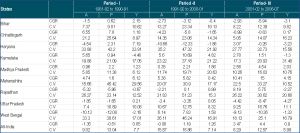 | Table 1- Compound Annual Growth Rates and Coefficients of Variation in Area, Production and yield of Gram CGR = Compound Growth Rate; CV =Coefficient of Variation; Source: CMIE [3]. |
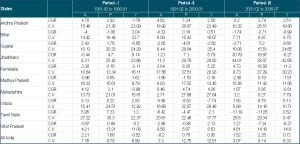 | Table 2- Compound Annual Growth Rates and Coefficients of Variation in Area, Production and yield of Arhar CGR = Compound Growth Rate; CV =Coefficient of Variation; Source: CMIE [3]. |
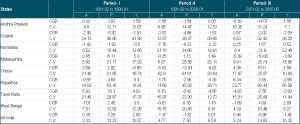 | Table 3- Compound Annual Growth Rates and Coefficients of Variation in Area, Production and yield of Other Pulses CGR = Compound Growth Rate; CV =Coefficient of Variation; Source: CMIE [3]. |