


ISSN :
EISSN :



NAIR S.P.1, LEMMA Z.T.2, KELEMU T.3, KASSIM M.4, RAMASWAMY V.5*
1Department of Biomedical Sciences, College of Public Health and Medical Sciences, Jimma Uiversity, Ethiopia.
2Department of Biomedical Sciences, College of Public Health and Medical Sciences, Jimma Uiversity, Ethiopia.
3Department of Biomedical Sciences, College of Public Health and Medical Sciences, Jimma Uiversity, Ethiopia.
4Department of Biomedical Sciences, College of Public Health and Medical Sciences, Jimma Uiversity, Ethiopia.
5International Centre for Intellectual Training and Empowerment (INCITE) Sri Rams, N.H.Road, Kazhakuttom, Trivandrum- 695 582, Kerala, India.
* Corresponding Author : vidhya.ramaswamy@gmail.com
Received : 13-04-2012 Accepted : 15-06-2012 Published : 22-06-2012
Volume : 1 Issue : 1 Pages : 7 - 11
World Res J Entomol Nematol 1.1 (2012):7-11
The studied area has a total population of 1361. The dominant ethnic group and religion is Oromo and Islam respectively. The main means of livelihood of the kebele is agriculture. Most of the people are literate. The main means of communication is radio. The majority of the population of kebele earn an annual average income between 1000 and 5000.This indicates that majority of the community are categorized under lower group. The CBR and CDR are low. From the population distribution of the pyramid of the kebele, it can be concluded that the number of males exceeds that of males. The main problem of the kebele is found to be lack of infrastructure.
Confusion matrix, Data Mining, Decision tree, Neural Network, stacking ensemble, voted perceptron.
Ensuring high quality healthcare will remain unattainable in most developing countries is due to the lack of interventions targeted at reducing the public health problems. This may be due to the lack of resources or because of negligence. The frequent occurrence of the parasitic skin disease is as a result of deprivation, social neglectance and inadequate health care behaviour. In this study we combined clinical and Social Science perspectives and methods to best assess and understand the issues affecting the prevalence of the neglected disease, tungiasis among most vulnerable groups, children.
Tungiasis is an inflammatory skin disease caused by the infection of the female ectoparasitic flea, Tunga penetrans. The adult flea penetrates the host skin with the proboscis, enter in to the host body and lead a parasitic life within the host body. This results in skin inflammation, severe pain, itching and a lesion at the site of infection that is characterized by a black dot at the center of a swollen red lesion, surrounded by a white hallow [1] . The removal of the flea with unsterile needle or thorn may results in secondary infection [7] of the lesions characterized by pustule formation, suppuration and ulceration with typical bad smell. Repeated infection may results in deformation of nails, loss of nails, and difficulty in walking or gripping.
It is a part of a prospective cross - sectional study conducted at a rural Kabila, Alemeyehu mecha located in the Oromia region of Mana Woreda, Jimma, South Western Ethiopia. This place has hilly and swampy features with an altitude of about 1700 meters to 2000 meters above sea level. The total population is about 3535 of which 1732 are males and 1803 are females. Total number of children between the age group of 1-17 is 684 of that 346 are males and 338 are females. Muslim religion is very dominant ie about 84.86%. Most people of the Kabile depend on agriculture for their livelihood. We used a standard questionnaire prepared based on the WHO questionnaire for tapping socio-economic conditions of the population. The study was approved by the ethical committee, Jimma University, Ethiopia. The study was started on October 2010. We included children between the age group of 1-17 of either sex.
The study population was selected from the census population using the formula
and a subgroup population were selected by simple random method using computer software. Clinical evaluation of the afflicted subjected were conducted to reveal the severity of the infection and sufficient photograph were taken. The data collected were entered in computer daily and data were analysed using SPSS version 16.
Alemayehu Mecha is located in Oromia Region of Jimma zone of Mana Woreda about 17kms away from Jimma University. It has a climatic condition of Woyina-Dega with geographical boundaries of; in the East Lemi Lelisa, in the West Hunda Tole, in North Yebu town, in South Doyo kebele. The kebele has hilly and swampy features with an altitude of about 1700meters-2000meters above sea level. The kebele has a rural status and has 25 streams and 2 ponds within it. About 2 gashas or 80 hectars of the kebele is used for irrigation. The population of the kebele is sparsely distributed. The total population is about 3535 of which1732 are males and1803 are females. The main source of income is farming. Some of the community members work in governmental organizations like primary school, health station. There are four mosques in the part of the kebele in which we carried out our study. This part contains the analysis of variables encompassed in our data collection at Alemayehu Mecha kebele in brief descriptions, tables and different types of graphical representations.
[Fig-1] , [Table-1] , [Table-2] .
As our study indicates most population of Alemayehu Mecha are Oromos i.e. 84.86%.There are also other ethnic groups distributed in small proportion. These small numbered ethnic groups include: Yem (6.23%), Amhara (5.07%), Gurage (3.82%) and others (which are very small proportion and very mixed type=2.43%).
Two religions i.e. Muslim and Orthodox are seen to be followed by significant number of people. However, the number of Muslims is very dominant (84.86%) and the presence of Protestants and other religions though in very small proportion is also understood from our data. Those religions included in others are Catholic, Adventist and Traditional belief.
In our concerned kebele the number of married individuals is a bit larger (55.03%) than other groups of marital status, the singles being the second numerous. there are also widowed 1.65% and divorced (1.14%) people.
[Table-4] .
Most people of the kebele depend on agriculture for their livelihood. Mixed agriculture, trading, animal husbandry, working in governmental organizations are also practiced in this order (from more to less numerous). Other means of live hood including daily labor and wood work (carpenter) are practiced in somewhat significant scale.
Most farmers of the kebele produce only food crops (53.03%) however the number of farmers that produce both cash and food crops are not that much further from those that produce food crops (38.94%). only cash crop producers are lesser in proportion (8.08%). The Cash crops produced include coffee, chat, and others like vegetables, fruits etc. both coffee and chat are produced in larger proportion (62.05%) coffee (7.58%) chat (12.31%) and others (9.16%). Food crops produced are mainly teff, maze, kocho. Sorghum and other types of food crops like wheat, pea are also produced though in small amount.
The number of house holds whose means of live hood is trading is 32. Most of them trade both coffee and chat. There are 7 shops, 4 small cafeterias and one restaurant. The type of trading can be classified in to small and large scale based on the amount of their yearly income.
The dwellers of Alemayehu Mecha kebele have low access to different means of communication like television, telephone, postal service and different printed texts like newspapers; magazines etc. only about 60% of the house holders have radios in their houses. Exceptionally, about 5 individuals have mobile phones.
[Table-5] .
Most mothers give birth in their home (80.65%) rather than going to health institutions.
Among the total number of sick people (51) in the community, 36 of them seek help.
About 16 people died in the study community within the last 1year of time. Higher percentage of death occurs above the age of 65 years. In the productive age group about 4 deaths occur and the least percentage of death occurs in the age group less than 28 days. 2 people died in the age group ranging from 28 days-1 year. from the age group 1-5year only one death occur and from 6-14 years 2 deaths occur the dominant cause of death in the area seen from the study is aging and also like tuberculosis contributed.
The study covered households with a total population of 1361.As it can be understood from [Table-1] and the population pyramid, the studied community has a total population of 1361, out of which 697(51.22%) are males and 664(48.78%) are females. Most of them are under the age of 25. As depicted by [Table-2] , heads of the households constitute 19.03% while the spouses are 17.56%. The decreased number of spouses as compared to heads, is due to the presence of female headed houses and some widowed households. Children (daughters/sons) constitute the highest percentage of 61.35% of the studied population while 1.84% and 0.22% is relatives and non-relatives respectively. The ethnicity ratio of the population is depicted in [Fig-2] . Accordingly, Oromos cover the greater percentage of the population (84.86%).There is also other ethnic groups with smaller percentage. These includes Yem (6.23%), Amhara (5.07%), Gurage (3.82%) and other ethnic groups with a very smaller percentage constituting a total of 2.43% includes Tigre, Kafa, Wolaita etc. As revealed In [Fig-3] Islam is the most dominant religion having 84.86% of the population as its followers. 14.04% of the population follow Orthodox Christianity while Protestant Christians are 0.81%. Other religions have very small followers of only 0.29% of the population. It is possible to understand that more percentage of the population of the kebele is at least able to read and write from [Fig-4] . [Fig-5] shows that majority of the literate people (368 of which 199 are males and 169 are females) have attended first cycle primary school (grade 1 to 4th). Those that have attended from grades 5 to 8 are 206(111 males and 95 females). About 40 literate people (22 males and 18 females) have attended grades 9 & 10. Those that have attended grades 11 $ 12 are about 17 while only 7 individuals have attended in higher educational institutions. Based on the data collected, the married people take the highest percentage (55.03%), singles are 42.18% and the remaining are widowed (1.65%) and divorced (1.14%).
The more numerous occupational groups are students (398) Farmers constitute 390(29.24% of the total population) as provided in [Table-3] Unemployed individuals are about 10(0.74%of the total population) while 374(27.48% of the total population are under aged (0-14 years) and overaged (>65). The remaining 19(1.39%) of the community are involved in different occupations like wood work, daily labor and the like.
Regarding the means of livelihood of the people, most of them are dependant upon farming, constituting about 60.62% of the total households. About 15% of them practice mixed type of agriculture. Animal husbandry and trading serve as a means of livelihood for small number of people. The majority of the farmers (53.03%) produce food crops. Some of them (38.9%) grow both food and cash crops while only small numbers of farmers (8.07%) yield cash crops only. Major food crops produced include teff, maize, sorghum and inset in their decreasing order. Coffee and chat are the most common cash crops cultivated. Most of the merchants in our study area involved in small scale trading (constituting more than 70%). The majority of the population have small annual income, <5000 birr, just enough only for consumption.
The CBR (Crude Birth Rate) for Alemayehu Mecha kebele is 22.78. It is very less as compared to 37.30 CBR of Oromia region and 37.20 of that of the National value. This wide range of variation might be due to the small size our study community and better family planning programs there. The CDR (Crude Death Rate) of the studied area is 11.76 which is closer to the regional and values which are12.9 & 12.01 respectively.
DR (Dependency Ratio) is 78.61 in the community which is closer to the National values (81.6) but far less than that of the regional value.
IMR (Infant Mortality Rate) is 96.78.
In the kebele the number of males is greater than that of females. As a result, the SR (Sex Ratio) is 104.97 which is greater as compared to the regional (99.68) and national (100.50) ratios.
The CMR (Child Mortality Rate) is 32.26.
[1] Ministry of health and Health Related Indicators (2004) Federal Democratic Republic of Ethiopia.
» CrossRef » Google Scholar » PubMed » DOAJ » CAS » Scopus
[2] Central Statistical Authority (CSA)(1999) The 1994 Population and Housing Census of Ethiopia.
» CrossRef » Google Scholar » PubMed » DOAJ » CAS » Scopus
[3] Abebe Adugna (2006) Journal of Oromo Studies, 13(1&2), 1-18.
» CrossRef » Google Scholar » PubMed » DOAJ » CAS » Scopus
[4] CSA (2000) Ethiopia as Demographic and Health Survey.
» CrossRef » Google Scholar » PubMed » DOAJ » CAS » Scopus
[5] Jimma University (2004) Community based Education Guideline.
» CrossRef » Google Scholar » PubMed » DOAJ » CAS » Scopus
[6] Central Statistical Agency Addis Ababa, Ethiopia and ORC Macro Calverton, Maryland, USA (2005) DHS Final Reports.
» CrossRef » Google Scholar » PubMed » DOAJ » CAS » Scopus
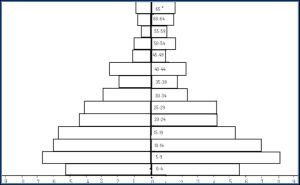 | Fig. 1- Population pyramid of Alemayehu Mecha kebele by age and sex. |
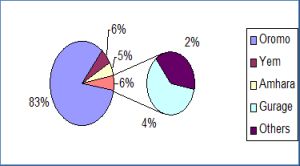 | Fig. 2- Ethnicity distribution in Alemayehu Mecha kebele |
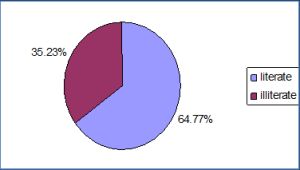 | Fig. 3- Educational status in Alemayehu Mecha kebele |
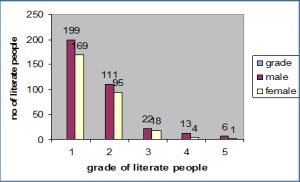 | Fig. 4- Educational status in terms of literate people in Alemayehu Mecha kebele |
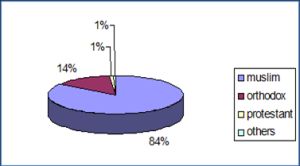 | Fig. 5- Religion distribution in Alemayehu Mecha kebele |
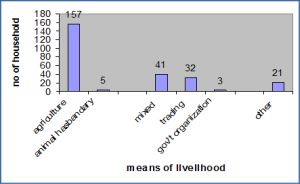 | Fig. 6- Means of livelihood in terms of number of household in Alemayehu Mecha kebele |
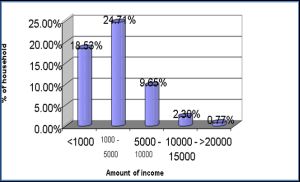 | Fig. 7- Amount of annual income of Households of Alemayehu Mecha kebele |
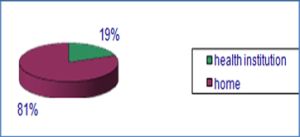 | Fig. 8- Place of Delivery for New Borns in Alemayehu Mecha Kebele |
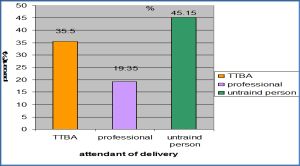 | Fig. 9- Number of attendants of delivery for births in Alemayehu Mecha kebele |
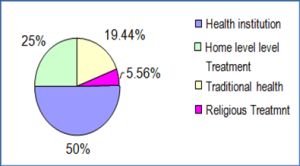 | Fig. 10- Place of treatment for Morbid in Alemayehu mecha kebele |
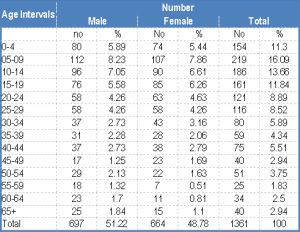 | Table 1- Population distribution of Alemayehu Mecha kebele by age and Sex. |
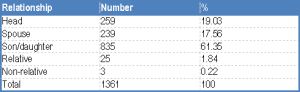 | Table 2- Family Relationship to the head of the house hold in Alemayehu Mecha kebele |
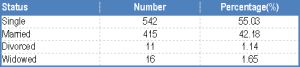 | Table 3- Marital status of population of alemayehu Mecha Kebele |
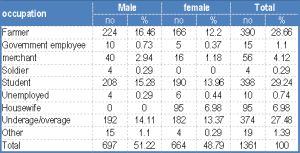 | Table 4- Occupational status of population of Alemayehu mecha kabele |
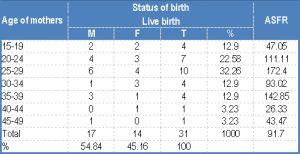 | Table 5- Birth status and age specific fertility rate in Alemayehu Mecha Kebele. |
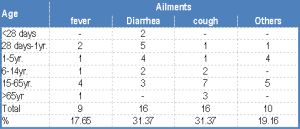 | Table 6- Ailments vs. age distribution of sick people in Alemayehu mecha kebele |
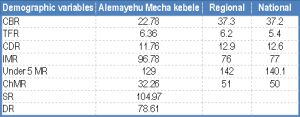 | Table 7- Value of demographic variables of Alemayehu Mecha kebele in comparison to the regional and national values. |