


ISSN :
EISSN :



IBRAHIM S.K.1*, IBRAHIM L.2, CHOUEIRY I.3
1Department of Crop Protection, Lebanese University, Beirut, Lebanon
2Department of Crop Protection, Lebanese University, Beirut, Lebanon
3Department of Crop Protection, Lebanese University, Beirut, Lebanon
* Corresponding Author : sibrahim58@yahoo.com
Received : 13-05-2012 Accepted : 12-06-2012 Published : 15-06-2012
Volume : 1 Issue : 1 Pages : 1 - 6
World Res J Entomol Nematol 1.1 (2012):1-6
In a survey 93 samples were collected from banana plantation in different regions on the coastal area of Lebanon. Almost all the collected soil samples (96.7%) and 88.2% of the collected root samples were infected with nematodes. The soil infestation ranged between 0 to 39 nematodes /g soil, while the number of nematodes in root samples ranged between 0 to 72.5 nematodes /g roots. Radopholus similis were identified in both, soil and root, samples as well as Rotylenchulus sp., Xiphinema sp., Longidorus sp., Meloidogyne spp., Helicotylenchus sp., and Pratylenchus spp. Crude oil and eight pure components of Origanum were tested against Radopholus sp. Thymoquinone (LC50=0.045 µl/ml), thymol (LC50=0.18 µl/ml), and carvacrol (LC50=0.9 µl/ml) were found to be the most toxic against Radopholus similis after 4 hrs. of exposure, followed by those of p-cymol (LC50=6.3 µl/ml), and (1S)-(-)-α-Pinene (LC50=36 µl/ml). However, caryophyllene (LC50=49 µl/ml), terpinene (LC50=58 µl/ml), and (1R)-(+)-α-Pinene (LC50=58 µl/ml) were less effective against Radopholus even after 24 hrs. of exposure. Crude oil (LC50=4.8 µl/ml) also gave high degree of nematicidal activity on Radopholus similis 4 hrs. post treatment. The results of pot experiments revealed that the most significant effect on the number of nematodes was with Cucurbit sp. (89%) followed by Chrysanthemum coronarium (88%), Melia azadirachta (85%), Origanum syriacum (77%), Foeniculum vulgare (68%), Inula viscosa (66%) and Allium sativum (44%) extracts. The highest concentration of essential oils (5-6%) was detected in leaf extracts of Origanum.
Burrowing nematodes, Origanum sp. plant extracts, Radopholus similis, survey.
Banana is one of the most important of all crops. Total banana production in the world is estimated at over 76 million metric Tons. Annual sales worldwide are about US $2.5 billion [1] . Banana has been cultivated in Lebanon for at least 50 years and expanded on throughout the Lebanese coast [2] . The total surface of banana planted in 1997 was 3248 ha [3] . Banana is an important cash crop for Lebanon and the industry is now worth 35 million dollars annually. Pests and diseases may be important constraints to fruit production and quality in all systems of banana cultivation. Plant parasitic nematodes are widespread and are the most damaging pests of bananas causing severe crop losses and seriously limiting productivity on banana plantation [4-6] . The burrowing nematodes is the most damaging and widespread nematodes attacking bananas. It is present throughout the tropics and subtropics [7-8] . Radopholus parasitize the banana root system and can reduce yield by up to 80% [9] . Agrochemicals have been playing a major role in meeting yield requirements in world food production. However, concern has arisen out of findings relating them to human health and environmental problems. Some pesticides contain active ingredients that have been shown to cause loss of fertility, carcinogenesis and mutagenesis. Widespread application to most cash crops means pesticides are present in the ecosystems, aquifers and water systems of the main agricultural areas. In the long-term, this could have repercussions for both the natural environment and human health [10,11] . However, there is an urgent need to find alternatives for the use of pesticides, which are less toxic and more environmentally friendly. Lebanon is characterized as a country rich with a great biodiversity of medicinal and aromatic plants [12] . Plant extracts containing volatile compounds, especially essential oils, have been found to possess antimicrobial, insecticidal and nematicidal activity [13-17] . Certain plants are able to kill or repel pests, disrupt their lifecycle, or discourage them from feeding. Plant extracts may contain volatile and non-volatile components [18] . Some of these components may be detected at a distance by olfaction and act as attractants or repellents [19] . Some common components of essential oils of Origanum sp. such as carvacrol and thymol were shown to have nematicidal activity [17,20,21] . Carvacrol (61%) and thymol (21.8%) were the most common components in Origanum syriacum [17] .
The possibilities for controlling nematodes in bananas are limited because in most systems of cultivation they are grown as a permanent crop and there are no nematode resistant varieties. Also there is no specific nematode control methods are yet practiced in traditional cultivations where crop debris including grass, coffee, oil palm and cocoa husk are used in some countries. The effect of mulches on nematode populations is not clear [22] and the critical evaluation of the use of organic materials in banana plantations is long overdue. Bananas are grown in mixed fields with many other crops. Soil fumigation as a pre-plant treatment with Telone II® (1,3-dicloropropene) is very effective in suppressing nematode populations. It is short lived compared to the life of a banana crop. Plant-parasitic nematodes tend to repopulate an area fairly quickly after fumigation. Telone is a potential contaminant of groundwater, restricted-use pesticide, and is also rather costly [23] .
The burrowing nematodes in Lebanon have not been studied, and farmers are not aware of their presence, dissemination and impact on bananas. The current study is first to report the occurrence and distribution of the burrowing nematodes and other species of plant parasitic nematodes on banana in Lebanon. The impact of different medicinal and aromatic plant materials on barrowing nematodes in pot experiments is investigated. The effect of crude essential oils and pure components of Origanum syriacum on Radopholus similis are also evaluated.
Sampling Method
Ninety three soil samples and similar number of roots samples were collected between April and May 2010 from different regions of commercial banana plantations [Table-1] and [Fig-1] . Approximately, each banana orchard was divided into 1 Dunum depending on the size of the orchard. Collection of samples was carried out according to the method used by Speijer and De Waele [24] with some modification. Several holes 20 x 20 x 20 cm3 were dug next to the corm of the mother plant and all banana roots in this volume were collected and placed in a marked plastic bag. Two different samples were taken from each orchard. Each sample contained about 1-1.5 kg of soil taken from around several banana plants. The top 5 cm soil was discarded. Root samples were collected and placed in the same bag, numbered inside and outside of each sample. Samples were stored in the fridge at 4°C until used. Nematodes were identified using morphological characters (CAB International, UK).
Plant roots were gently washed, access of water removed, cut into small pieces and then weighed. Roots were placed in a sieve (53 mm) with tissue paper and then in a glass funnel. Distilled water was slowly added and left for 24 hrs. at room temperature for nematodes extraction. After 24 hours, the sieve containing roots was removed, water was collected into a measuring beaker and the volume of water was recorded. Each sample was mixed well and 2 ml suspension was transferred into a counting chamber. The number of nematodes was counted and recorded.
The soil extraction was prepared as reported by Fenwick [25] . A bunch of 150 g soil was placed in the funnel and water was added slowly to moist the soil and left for 24 hours for extraction. Each sample was treated similarly to root samples. The number of nematodes in 2 ml was counted and number of nematodes in 1 g of soil was estimated. In addition, slides preparations were made for identification using a microscope. Presence of other nematodes in each sample was identified using morphological measurements.
Samples of O. syriacum L. were collected from populations cultivated in Zoutar Alshrkia farm, south Lebanon, 350 m.s.l. in April 2010. The plants were identified according to Ietswaart [26] and Herbarium specimens were deposited at the Department of Crop Protection, Faculty of Agricultural and Veterinary Sciences, Lebanese University. Fresh leaves were used for the isolation of the essential oil and subjected to hydrodistillation in a Clevenger-type apparatus. Hundred grams of fresh material were placed into the apparatus with 400 ml of distilled water and hydrodistilled for 2 hrs. Essential oil was collected and dried over anhydrous sodium sulphate (Na2SO4). Yellowish oil was transferred into dark glass bottles and stored at -20°C until required. Pure components were purchased from Sigma. To determine the concentration of an essential oil in each plant extract the following formula was used: Yield (%) = (volume of essential oil/weight of dried test material) X100.
Crude essential oil and 8 commercial pure components of Origanum syriacum were tested: (1S) - (-) - α- pinene; (1R)- (+) - α- pinene; terpinene; caryophyllene; p-cymol; thymoquinone; thymol and carvacrol. Freshly extracted (within 24 h) nematodes (mixture of different life stages) were placed (approx. 50 nematodes per watch glass) in cavity watch glasses containing different concentrations (0 (control), 0.1, 0.5, 2, 4, 8 µg/ml liter-1) of each component. Watch glasses were covered with glass slides to prevent oil evaporation. Nematodes mortality was recorded after 1, 2, 4 and 24 hrs. and LC50 for each treatment was calculated using Probit analysis. Nematodes were considered dead if they did not respond to being touched by a small probe [27] . The percentage of mortality was determined. This experiment was repeated twice.
Infested soils with the burrowing nematodes were collected from an infested banana orchard (Naameh, Al-Shouf) previously tested and the nematodes identified using morphological characters (CAB International, UK). Collected soils were thoroughly mixed and divided into several batches. Different plant materials (Allium sativum, (whole plant), Chrysanthemum coronarium (stem, leaves), Cucurbits sp (seeds), Foeniculum vulgare (leaves), Inula viscosa (leaves), Origanum syriacum (leaves), Melia azadirachta (leaves) [Table-4] ) were air dried at room temperature, chopped into small pieces and 30 g of each treatment were mixed thoroughly with approximately 1.5 kg of infested soil (per replication), and then placed in 2 litre plastic pot. Each pot was planted with two weeks old banana plant. Each treatment was replicated eight times. The control was replicated eight times and treated under the same conditions but without treatment. Pots were arranged on the bench in a randomised complete block design and watered as needed. For population initial (Pi) subsamples (replicated X3) were taken and extracted for nematodes count [25] . At 20 days interval from plating two plants were assessed. Each plant was carefully removed from the soil. Soil of each pot was thoroughly mixed and sub-samples of 150g were extracted for nematodes count (population final (Pf)).
Sigma Stat 2.0 was used for statistical analysis and calculation of statistical parameters (mean, two way ANOVA, Tukey). Significance of difference (P<0.05) were tested byTukey test. Data was transformed into probate unit and value determined.
Plant and Soil Survey
In the survey of banana plantations on the Lebanon coast 93 samples were collected. Almost all the collected soil samples (96.7%) and 88.2% of the root samples were infected with nematodes. The level of infestation of soil sample was ranging between 0.12 and 39 nematodes per g soil. The number of nematodes in root samples ranged from 0 to 72.5 nematodes in g roots [Table-1] . Both, soil and root, samples collected from the north areas were all infested with nematodes where the number of nematodes ranged from 0.4 to 6 per g/soil and from 1.3 to 13.7 per g/soil in the root system. Similar infestation (100%) was detected in samples collected near Beirut areas except for Damour area (82.6%). Over 51 of soil and root samples were collected from south of Lebanon. The infestation ranged from 66.6% to 100% in both soil and root samples. The number of nematodes ranged from 0 to 13.2 in 1 g/soil while from 0 to 17 in 1 g/roots [Table-1] . Several genera were identified in both, soil and root, samples including: free-living nematodes, Rotylenchulus sp., Xiphinema sp., Longidorus sp., Meloidogyne spp., Helicotylenchus sp., and Pratylenchus spp. During the survey a visible symptoms such as “toppling†of the trees caused by nematodes were evident especially on the old plantation. The damage was varying from one area to another.
The highest concentration (5-6%) of oil was extracted from leaves of O. syriacum, however, a traceable amount (< 1%) was detected in the stems and was not used for further extraction.
The crude essential oil extracts began to affect Radopholus similis at lower concentrations within minutes of exposure with slow body movements becoming apparent. As the concentrations increased from 0.1 to 8 mg/liter, there was a corresponding increase in the percentage mortality of nematodes [Table-2] . However, at 0.1 µl/ml of crude oil, total death of nematodes occurred after 24 hrs. of exposure. Four hours post exposure the LC50 values were 4.8 mg/liter. With increasing concentration, the percentage of death increased reaching 100% at all the concentrations used after 24 hours of exposure. Total mortality was obtained at 8 µl/ml with carvacrol, thymoquinone and thymol. While (1R)-(+) α-pinene, β-caryophylle and (1S)-(-)-α-pinene were less effective against Radopholus similis at the same concentration [Table-3] . Thymoquinone (LC50= 0.045 µl/ml), carvacrol (LC50=0.9 µl/ml), and thymol (LC50= 0.18 µl/ml ) were the most effective against nematodes after 4 hrs. of exposure to substrates.
The impact of different plant materials on Radopholus similis are presented in [Table-4] . All the treatments used had significant effect (P<0.05) on nematode invasion in comparison to the control. Not all the treatments showed similar effect against Radopholus similis. The most significant effect on the number of nematodes was achieved with Cucurbit sp (89%) followed by Chrysanthemum coronarium (88%), Melia azadirachta (85%), Origanum syriacum (77%), Foeniculum vulgare (68%), Inula viscosa (66%) and Allium sativum (44%) extracts.
The results of field survey revealed for the first time the widespread distribution of borrowing nematodes throughout the country. Almost all surveyed areas showed infection with nematodes. The level of infestation was varying from one area to another in soil samples that ranged between 0.12 and 39 nematodes in 1 g/soil; the number of nematodes in root samples ranged between 0 and 72.5 nematodes in 1 g/roots, which might have negative effect on the banana production in the country. Moens [9] reported that R. similis parasitize the banana root system and can reduce yield by up to 80%. During the survey visible symptoms/damages with toppling of the trees caused by nematodes was evident especially on the old plantations. The damage was also varying from one area to another. In Lebanon, the economic effect of plant parasitic nematodes on banana has not been established. The current survey also discovered the presence of other most economically important plant parasitic nematodes on banana including, Rotylenchulus sp, Xiphinema sp, Longidorus sp, Meloidogyne spp., Helicotylenchus sp., and Pratylenchus spp. In a survey carried out in India, 8 different species of plant parasitic nematode (H. multicinctus, H. dihystera, P. coffeae, R. similis, Tylenchorhynchus sp., R. reniformis, M. incognita and Hoplolaimus indicus) were associated with banana invasions [28] Controlling nematodes weigh heavily on the use of nematicides in form of fumigant such as Telone II and other organophosphates, which are harmful to human, environment and beneficial organisms. One way of searching for environmentally benign nematicidal compounds is to screen naturally occurring compounds in plants. Allelochemicals are plant-produced compounds that affect the behaviour of other organisms and thought to be toxins and secondary metabolites, which act as attractants or deterrents [29,18] . For example, sudan grass contains a chemical called d’hurrin that degrades into hydrogen cyanide and is a powerful nematicide [30] . Our results revealed that all essential oil/ plant extracts tested had nematicidal effect. Almost all essential oil/ plant extracts tested affected the growth of nematodes in pot experiments and even at the lowest concentration (0.1µg/ml liter-1) in direct contact with nematodes. Essential oils from various plants have shown promise as potential sources for new nematicides. Most of these plants are aromatic and culinary herbs that contain the nematicidal compounds such as carvacrol and thymol [21] . Over 20 major compounds of essential oils were identified [17] , however, components such as carvacrol, linalool, thymol and menthone were the most toxic against the J2 of M. incognita. In this study very low concentration (1 mg liter-1) of several components gave high mortality against Radopholus similis. The essential oils from the following plants ranked the highest for nematicidal activity: caraway, fennel, applemint, spearmint, Syrian oregano, and oregano [21] .
The highest concentration of 1,8- cineole (40%) was found to be abandoned in a wide range of plants [30-31] . In our investigation, thymoquinone, thymol and carvacrol have exhibited nematode-suppressive characteristics equivalent to cadusafos a synthetic chemical pesticide [32] . The estimated LC50 value for essential oils against Radopholus similis was 0.2 mg liter-1 compared to 0.49 mg liter-1 for oxamyl and 4.63 mg liter-1 for aldicarb against Globodera rostochiensis on agar plates. Concentration of 0.1 and 0.5 mg liter-1 of oxamyl inhibited the orientation of M. incognita toward roots [33] and effected the orientation of juveniles of G. rostochiensis toward potato roots [34] . The mode of action of essential oils on nematodes is still not fully understood. In insects, several essential oils inhibit acetycholinesterase activity [35] . Some common components of essential oils such as carvacrol, t-anethole, and thymol have been identified as insecticidal [36-37] . Some of these components were shown to have nematicidal activity [21] . The lethal concentration (LC90) for thymol against M. arenaria in soil was 161 ppm and the efficiency of thymol was enhanced synergistically in combination with a synthetic benzaldehyde [20] . In our experiments thymoquinone (LC50=0.045 µl/ml), thymol (LC50=0.18 µl/ml), and carvacrol (LC50=0.9 µl/ml) were found the most toxic against Radopholus similis after 4 hrs. of exposure.
Nematodes are attracted to marigold roots but when they invade them, the root releases ozone killing them [38] . Moreover, French marigold (Tagetes patula) was also shown to be the most effective type in lowering root-knot nematode populations [38] . Belcher and Hussey [39] found that T. patula acted as a trap crop to M. incognita, but prevented giant cell initiation. On the other hand, a minimum concentration of 1 mg liter-1 of A. sativum L. and F. vulgare L. significantly decreased the emergence of juveniles of M. incognita to 7.6% and 25%, respectively [40] . Leaves extracts of Crotalaria virgulata subsp. grantina had a nemostatic effect on J2 of M. incognita at the same concentration [41] . Pérez and co-workers [42] reported that C. coronarium L. extracts also reduced the hatching, J2 survival and reproduction rate of M. artiellia in vitro. In our study C. coronarium significantly reduced the growth of Radopholus similis in pot experiment. Leaf powder rock fleabane (Inula viscose) at a concentration of 0.1% in sand reduced hatching of second-stage juveniles of M. javanica and the citrus nematode (Tylenchulus semipenetrans) but the stem-bulb nematodes (Ditylenchus dipsaci) were unaffected [43] . Similar affect was obtained in our investigation using the same plant extracts. Clove extract and Nimbecidine did not show any potential for the control of Aphelenchoides fragariae on its host [44] . Gupta and Sharma [45] report indicated that garlic extract had increased larval mortality by 88.64-98.88% at 0.05-10% concentration and it increased with increased exposure time. Also, Nath and colleagues [46] found that garlic extract had 100% lethal effect on J2 of M. javanica and 100% reduction of root penetration, while Shady and Soliman [47] reported that the application of chopped garlic cloves (80 mg/tree) gave the highest reduction percentage (85%) compared to the control treatment in nematode population of M. incognita in soil and roots of grapevine tree. According to Stoll and Sebeck [48] the nematicidal activity of garlic is attributed to allicin, diallyl disulfide, ammonia and pyruvic acid. However, Chitwood [49] proved that allicin at a concentration of 25 μg/ml inhibited penetration of roots by M. incognita juveniles by 50% and was not phytotoxic. In the current study A. sativum showed moderate control (44%) of Radopholus spp. Also, we can suppose that the seven dried plant materials of Cucurbit sp, C. coronarium, M. azadirachta, O. syriacum, F. vulgare, I. viscosa, and A. sativum have nematicidal effect in controlling the burrowing nematode R. similis with different ratios and different mechanisms. Further investigations are required, which could lead to the exploitation of the natural biocidal activity of plant extracts against nematodes as an environmentally benign control measure.
The authors thank the Lebanese National Council for Scientific Research and the Lebanese University for financial support and the Faculty of Agriculture, Lebanese University for using its facilities.
[1] Brooks F.E. (2004) Nematropica, 34, 65-72.
» CrossRef » Google Scholar » PubMed » DOAJ » CAS » Scopus
[2] Tawk S.T. (1997) DEA-Thesis, AUPELF-UREF, Lebanon, 37.
» CrossRef » Google Scholar » PubMed » DOAJ » CAS » Scopus
[3] Ministry of Agriculture (2004) Atlas agricole du Liban, Lebanese Republic.
» CrossRef » Google Scholar » PubMed » DOAJ » CAS » Scopus
[4] Sarah J.L. (1989) Nematropica 19, 199-216.
» CrossRef » Google Scholar » PubMed » DOAJ » CAS » Scopus
[5] Gowen S. and Quénéhervé P. (1990) CABI Publishing, UK.
» CrossRef » Google Scholar » PubMed » DOAJ » CAS » Scopus
[6] Shahasi Y.A., Dubois T., Coyne D., Gold C.S., Labuschagne N. and Viljoen A. (2006) J. Nematol., 38, 455-460.
» CrossRef » Google Scholar » PubMed » DOAJ » CAS » Scopus
[7] Bridge J., Fogain R. and Speijer P. (1997) Pest Fact Sheet No.2, INIBAP, France, 4.
» CrossRef » Google Scholar » PubMed » DOAJ » CAS » Scopus
[8] Múnera-Uribe G.E., Bert W., Vierstraete A.R., Peña E.D. L., Moens M.and Decraemer W. (2010) Nematology, 12, 619 - 629.
» CrossRef » Google Scholar » PubMed » DOAJ » CAS » Scopus
[9] Moens T.H. (2006) Infomusa, 14(1), 39-40.
» CrossRef » Google Scholar » PubMed » DOAJ » CAS » Scopus
[10] Dinham B. (1993) Zed Books, London and New Jersey, 228.
» CrossRef » Google Scholar » PubMed » DOAJ » CAS » Scopus
[11] Chen Z.X. Chen S.Y. and Dickson D.W. (2004) CABI, Biddles Ltd, King’s Lynn, London, UK, 662-1191.
» CrossRef » Google Scholar » PubMed » DOAJ » CAS » Scopus
[12] Nehmeh M. (1978) National Council for Scientific Research, Beirut, Lebanon.
» CrossRef » Google Scholar » PubMed » DOAJ » CAS » Scopus
[13] Thackray D.J., Wratten S.D., Edwards P.J. and Niemeyer H.M. (1990) Annl. Appl. Biol., 116, 573-582.
» CrossRef » Google Scholar » PubMed » DOAJ » CAS » Scopus
[14] Okoko F.J., Nwafor O.E. and Ejechi B.O. (1999) Food Res. Int., 32, 395-399.
» CrossRef » Google Scholar » PubMed » DOAJ » CAS » Scopus
[15] Digrak M., Alma M.H., Llcim and Sen, S. (1999) Pharm. Biol., 37, 216-220.
» CrossRef » Google Scholar » PubMed » DOAJ » CAS » Scopus
[16] Marban-Mendoza N., Jeyaparakash A., Jansson H.B., Damon R.A. Jr and Zuckerman B.M. (1987) J. Nematol., 19, 331-335.
» CrossRef » Google Scholar » PubMed » DOAJ » CAS » Scopus
[17] Ibrahim S.K., Traboulsi A.F. and EL-hajj S. (2006) Phytopathologia Mediterranea, 45, 238-246.
» CrossRef » Google Scholar » PubMed » DOAJ » CAS » Scopus
[18] Brown P.D. and Morra M.J. (1997) Academic Press, San Diego, CA, USA.
» CrossRef » Google Scholar » PubMed » DOAJ » CAS » Scopus
[19] Pickett J.A. and Stephenson J.W. (1980) J. Chem. Ecol., 6, 435-444.
» CrossRef » Google Scholar » PubMed » DOAJ » CAS » Scopus
[20] Soler-Serratosa A., Kokalis-Burelle N., Rodriguez-Kábana R., Weaver C.F. and King P.S.(1995) Nematropica, 26, 57-71.
» CrossRef » Google Scholar » PubMed » DOAJ » CAS » Scopus
[21] Oka Y., Nacar S., Putieusky E., Ravid U., Zohara Y. and SpiegeL Y. (2000) Phytopathology, 90, 710-715.
» CrossRef » Google Scholar » PubMed » DOAJ » CAS » Scopus
[22] Obiefuna J.C. (1990) Biol. Agric. Hortic., 6, 227-283.
» CrossRef » Google Scholar » PubMed » DOAJ » CAS » Scopus
[23] Wang K.H. and Hooks C.R.R. (2009) Nematropica, 39, 57-73.
» CrossRef » Google Scholar » PubMed » DOAJ » CAS » Scopus
[24] Speijer P.R. and De Waele D. (1997) INIBAP, Montpellier, France.
» CrossRef » Google Scholar » PubMed » DOAJ » CAS » Scopus
[25] Fenwick D.W. (1949) J. Helminthol., 23, 157-170.
» CrossRef » Google Scholar » PubMed » DOAJ » CAS » Scopus
[26] Ietswaart J.H.A. (1980) Leiden University Press, Leiden, Netherland.
» CrossRef » Google Scholar » PubMed » DOAJ » CAS » Scopus
[27] Faske T.R. and Starr J.L. (2006) J. Nematol., 38, 240-244.
» CrossRef » Google Scholar » PubMed » DOAJ » CAS » Scopus
[28] Sundaram R. (1997) Pest Manag. Hortic. Ecosystems, 3, 120-123.
» CrossRef » Google Scholar » PubMed » DOAJ » CAS » Scopus
[29] Dodds C.J. (1996) British Crop Protection Council, Monograph, UK.
» CrossRef » Google Scholar » PubMed » DOAJ » CAS » Scopus
[30] Widmer T.L. and Abawi G.S. (2000) Plant Dis., 84, 562-568.
» CrossRef » Google Scholar » PubMed » DOAJ » CAS » Scopus
[31] Kojima H., Yanai T. and Toyota A. (1998) Planta Med., 64, 380-381.
» CrossRef » Google Scholar » PubMed » DOAJ » CAS » Scopus
[32] Ibrahim S.K. and Haydock P.P.J. (1999) J. Nematol., 31, 201-206.
» CrossRef » Google Scholar » PubMed » DOAJ » CAS » Scopus
[33] Wright D.L., Blyth A.R.K and Pearson P.E. (1980) Annl. Appl. Biol., 96, 323-334.
» CrossRef » Google Scholar » PubMed » DOAJ » CAS » Scopus
[34] Evans S.G. and Wright D.J. (1982) Annl. Appl. Biol., 100, 511-519.
» CrossRef » Google Scholar » PubMed » DOAJ » CAS » Scopus
[35] Ryan M.F. and Byrne O. (1988) J. Chem. Ecol., 14, 1965-1975.
» CrossRef » Google Scholar » PubMed » DOAJ » CAS » Scopus
[36] Isman M. (1999) Pesticides Outlook, 10, 68-72.
» CrossRef » Google Scholar » PubMed » DOAJ » CAS » Scopus
[37] Traboulsi A.F., Taoubi K., EL-Hajj S., Bessiere J.M. and Rammal S. (2002) Pest Manag. Sci., 58, 491-495.
» CrossRef » Google Scholar » PubMed » DOAJ » CAS » Scopus
[38] Ogden S. (1997) National Gardening, 21.
» CrossRef » Google Scholar » PubMed » DOAJ » CAS » Scopus
[39] Belcher J. V. and Hussey R.S. (1977) Plant Disease Reporter, 61, 525-528.
» CrossRef » Google Scholar » PubMed » DOAJ » CAS » Scopus
[40] Ibrahim S.K. and Traboulsi A.F. (2009) Lebanese Science Journal, 10, 59-69.
» CrossRef » Google Scholar » PubMed » DOAJ » CAS » Scopus
[41] Jourand P., Rapior S., Fargette M. and Mateille T. (2004) Nematology, 6, 79-84.
» CrossRef » Google Scholar » PubMed » DOAJ » CAS » Scopus
[42] Pérez M.P., Navas-Cortes J.A., Pascual-Villalobos M.J. and Castillol P. (2003) Plant Pathol., 52, 395.
» CrossRef » Google Scholar » PubMed » DOAJ » CAS » Scopus
[43] Oka Y, Ben-Daniel B. and Cohen Y. (2001) Nematology, 3, 735-742.
» CrossRef » Google Scholar » PubMed » DOAJ » CAS » Scopus
[44] Jagdale G.B. and Grewal P.S. (2002) Pest Manag. Sci., 58, 451-458.
» CrossRef » Google Scholar » PubMed » DOAJ » CAS » Scopus
[45] Gupta R. and Sharma N.K. (1991) Ind. J. Nematol., 21, 14-18.
» CrossRef » Google Scholar » PubMed » DOAJ » CAS » Scopus
[46] Nath A., Sharma N.K., Bhardwa J.S. and Thapa C.D. (1982) Nematologica, 28, 253-255.
» CrossRef » Google Scholar » PubMed » DOAJ » CAS » Scopus
[47] Shady A.M. and Soliman M. (2008) Research Institute, A.R.C., Giza, Egypt.
» CrossRef » Google Scholar » PubMed » DOAJ » CAS » Scopus
[48] Stoll A. and Sebeck E. (1950) Sci. Pharm., 18, 61.
» CrossRef » Google Scholar » PubMed » DOAJ » CAS » Scopus
[49] Chitwood D.J. (2002) Annu. Rev. Phytopathol., 40, 221-49.
» CrossRef » Google Scholar » PubMed » DOAJ » CAS » Scopus
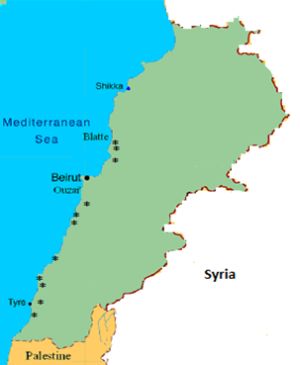 | Fig. 1- Map of Lebanon showing collection sites of soil and root samples. |
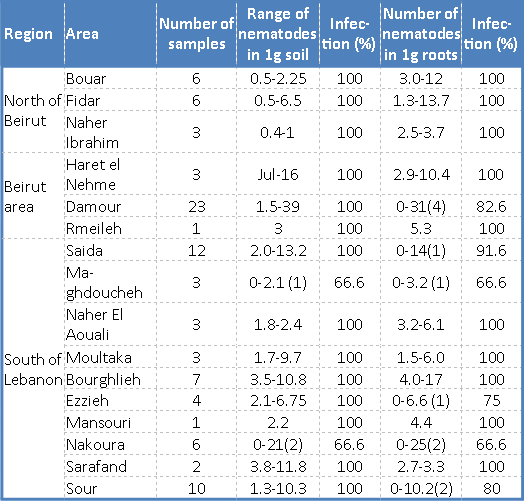 | Table 1- Numbers of free-living and plant-parasitic nematodes in soil and root samples collected from various locations in Lebanon ( ) Number of samples free of nematodes in particular area |
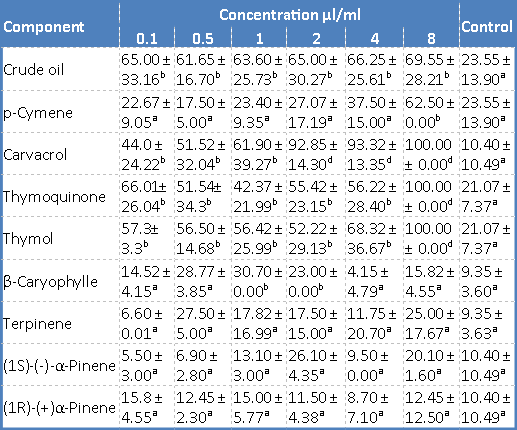 | Table 2- The effect of crude and pure components of Origanum syriacum on mortality (%) of Radopholus similis aThe data are the mean of two experiments (Tukey test). Data followed by the same letter are not significantly different at P<0.05. |
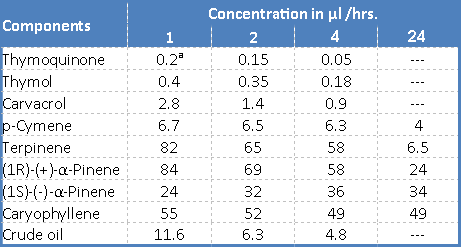 | Table 3- LC50 of each component for each treatment aLC50, components concentration at which 50% of nematodes individuals were dead. |
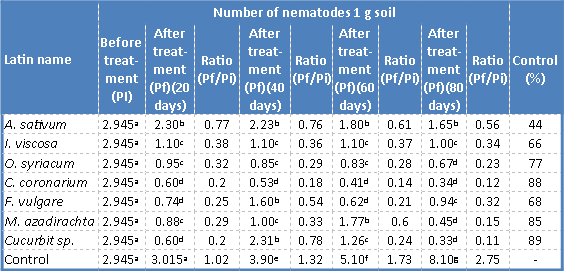 | Table 4- Effect of different medicinal and aromatic plants materials against Radopholus similis in pot experiment PI- Population initial, Pf- Population final. aThe data are the mean of two replications. Data followed by the same letter are not significantly different at P<0.05 (Tukey test). |