


ISSN :
EISSN :



RAMIN SHAMSHIRI1*, WAN ISHAK WAN ISMAIL2
1Dept. of Biological and Agricultural Engineering, Universiti Putra Malaysia, 43400 UPM, Serdang, Selangor, Malaysia.
2Dept. of Biological and Agricultural Engineering, Universiti Putra Malaysia, 43400 UPM, Serdang, Selangor, Malaysia.
* Corresponding Author : ramin.sh@ufl.edu
Received : 01-05-2012 Accepted : 07-05-2012 Published : 06-08-2012
Volume : 1 Issue : 1 Pages : 1 - 5
World Res J Agric Biosyst Eng 1.1 (2012):1-5
Tomato has been grown successfully in highlands of Malaysia but the production is insufficient to meet the large market demand due to the problems associated with high temperature and relative humidity and lack in control system for the crop growing micro-environment. The objective of this work was to evaluate the performance of ventilation system by analyzing temperature and relative humidity based on vapor pressure deficit for greenhouse production of tomato in lowland conditions. A low-cost microcontroller-based data acquisition system was developed for the purpose of monitoring and collecting climate data in three days from inside and outside of a greenhouse located at the Universiti Putra Malaysia. The performance of pad-and-fan system was evaluated through an engineering approach by calculating the efficiency of evaporative cooling method for lowland conditions. The analysis results showed that proper utilization of natural and mechanical ventilation is a more effective way of providing acceptable growth conditions compared with pad-and-fan systems.
Greenhouse ventilation, evaporative cooling, vapor pressure deficit, tropical lowland, tomato.
The ultimate goal of any greenhouse control system is to minimize the input cost per unit of production and to increase the yield while maintaining production quality. Malaysian import bills on food products show a high demand on temperate agricultural crops. The lowlands of Malaysia experience a hot and humid climate throughout the year (temperature range: 21-32ºC, relative humidity (RH): 80-90%, solar radiation: 12-20 MJ/m2, wind speed: 2-22 m/s, and heavy rainfall 2032-2540 mm. Two major challenges in this region are high temperature and humidity; hence the main purpose of using a greenhouse in lowlands of Malaysia is to protect plants from extreme temperature, rain, wind, insects, and diseases. A well-designed and managed greenhouse environment reduces production costs, improves yield, and maintains crop quality.
Improving control systems that are suitable for Malaysian environment can potentially increase the production of locally grown fruits and vegetables. Advanced control methods such as feed-forward and feedback adaptive control, robust control, non-linear and optimal control, evolutionary algorithms, fuzzy control, and neural network methods have been discussed in a number of papers [1-6] . An important drawback in utilizing such control methods in a greenhouse environment is the difficulty in developing the dynamic model to simulate the behavior of the variables. A climate model to predict the temperature and humidity inside a greenhouse has been developed by [12-15] . Ultimately, the goal of any of these greenhouse control systems is to minimize the input cost per unit of production and to increase the yield while maintaining production quality.
The objective of this work was to evaluate performance of ventilation and pad-and-fan system for greenhouse production of tomato in lowland Malaysia. Temperature and relative humidity data was collected using a custom designed data acquisition system from an experimental greenhouse located at the campus of Universiti Putra Malaysia. Vapor pressure deficit was used to measure optimal air moisture conditions for plant production under different temperature levels. Based on the result of this study, it was shown that proper utilization of ventilation system can effectively provide a comfortable climate for greenhouse production of tomato.
Environmental Data
The ideal temperature and relative humidity at different growth stages of tomato was determined using a decision support system developed by [7] . According to this program, relative humidity in the range of 60% to 80%, and temperatures between 22°C and 30°C are ideal for tomato. The 20-year weather data for lowland environment provided by Meteorological Department of Malaysia shows that temperature ranges from 25ºC to 33ºC and relative humidity from 80% to 99%. Due to the interrelationship of temperature and relative humidity, the 20-year meteorological data was converted into the corresponding VPD values according to the procedure illustrated by [8] [Fig-1] . The accurate VPD range for each growth stage of tomato was also determined by converting the values of ideal temperature and relative humidity as given by [Table-1] .
It can be observed from [Fig-1] that the 24 hour temperature and relative humidity of lowland regions with a mean VPD of 0.56 kPa are close to the ideal growth conditions, therefore, a simple ventilation system would be sufficient to provide tomato with a comfortable environment and keep the inside conditions close to the ideal VPD values. To test this claim, a low cost microcontroller-based data acquisition system was designed and developed for data collection. Major parts of the hardware included a BS2P24 microcontroller from Parallax [Fig-2] , a 4 by 20 segments LCD display from Hitachi and three SHT11 temperature and humidity sensors from Sensirion [Fig-3] . Each sensor was interfaced to the microcontroller over two input and output (I/O) pins with a 4.7 kΩ pull-down resistor on the clock to avoid sensor lock-up as shown in [Fig-4] . The microcontroller was programmed in basic stamp language to read the sensor modules and display real-time data on the LCD. The temperature and relative humidity readings were sent to a personal computer through RS232 communication. The circuit diagrams for microcontroller connections are shown in [Fig-5] .
Depending on the size of greenhouse, pad-and-fan systems utilizes one or more exhaust fans installed at one end of the greenhouse with a large pad at the opposite end. A pump circulates water through and over the pad to let the thermal energy of the air be absorbed by the water. We consider a general representation of evaporative cooling in which air with temperature and relative humidity of
enters a long duct and exists with temperature
and relative humidity of
as shown in [Fig-6] .
The thermodynamic values for this system are provided in [Table-2] . We can show that with evaporative cooling, the air temperature can be decreased to the temperature of the supplying water, or and
[Fig-8] . Assuming ideal-gas behavior for air and water vapor, constant-pressure and an adiabatic process, and in the absence of any work interactions, solving mass and energy balance equations for this system yields:
Using the water mass conservation expression to eliminate in [Equ-2] , after simplifying and rearranging, we will have:
In the best case, with the above system, the output air will be maximally cooled down to the temperature of the supplying water, . Substituting
and
in (3), we can express the enthalpy difference of the air and approximate the enthalpy of the water vapor as follow:
Substituting for ,
in the combined mass/energy conservation expression to solve for
and by using the definition of humidity ratio (mass of water vapor per unit mass of dry air) and its relation with water vapor partial pressure, the relative humidity of air at the inlet as well as the relationship between air temperature at the inlet and outlet of the evaporative cooler is given can by [Equ-5] and [Equ-6] respectively:
The experimental greenhouse under the study was located in the campus of Universiti Putra Malaysia and had a floor area of 56.25 square meter (4.5 by 12.5 meter) with a height of 4.7 meter. The structure was covered by Polyethylene plastic film. The ventilation system that was installed on the greenhouse included two exhaust fans operating at 4300 cubic feet per minute (cfm) and three intake shutters each 1.25 square meter. Using the custom designed data acquisition system, temperature and relative humidity data was collected every 30 minutes in three consecutive days on 7, 8 and 9 September 2007 from inside and outside of the greenhouse. Data were converted to VPD values and corresponding plots are shown in [Fig-7] and [Fig-8] .
The analysis of evaporative cooling show that the amount of cooling that a pad-and-fan system can achieve, highly depends on the water content of the outside air. According to [Equ-5] , for a change of temperature from 25ºC to 20ºC with 100% relative humidity at the outlet, the relative humidity of air at the inlet (station 1, [Fig-8] ) should be 63.5%. In the other words, these systems are most effective in regions with relative humidity less than 65%. High humidity has always been a big challenge in greenhouse environmental control due to its interaction with temperature. Unlike relative humidity, VPD is independent of temperature and is directly related to plant transpiration, which is known to be important to ensure good plant growth as it better reflects the plant’s health by quantifying how close the greenhouse air is to saturation. Studies show that the fungal pathogens survive best at VPDs below 0.43 kPa. Furthermore, disease infection is most damaging below 0.20 kPa. Thus, the greenhouse climate should be kept with a VPD of above 0.43 kPa to prevent crop disease. A VPD between 0.8 and 1.0 kPa (8 and 10 millibars) was determined as ideal.
The statistical two-sample t-test was used to test the null hypothesis that with an appropriate ventilation system operating in a lowland greenhouse, the mean of inside temperature and relative humidity is not significantly different with their values of outside. In addition to that, one-sample t-test was used to compare mean of VPD values inside greenhouse with the ideal values of the VPD in the five growth stages of tomato. The p-values corresponding to the test statistics in each case are given in [Table-3] . From this result, it can be observed that the means of inside temperature and relative humidity are not different from outside values at any reasonable significant level. This result also indicates that the combination of temperature and relative humidity data inside greenhouse produce vapor pressure deficit that is not significantly different from the desired values for tomato production.
A combination of a natural and a mechanical ventilation system can provide adequate air exchange and distribution that will eventually reduce ambient temperature and humidity to the outside level. Air circulation can be enhanced by Horizontal Air Flow (HAF) fans that reduce temperature and humidity gradients by mixing the air. Information about size and number of fans, level of static pressure difference, and inlet/outlet functions as well as details on how to reduce condensation are addressed by [8] and [10] . Ventilation efficiency can be enhanced by considering issues such as plant row arrangement and greenhouse height. Rows of plants should be arranged parallel to the ridge or gutters of the greenhouse structure. A taller greenhouse improves climate uniformity and provides a larger internal air volume, which prevents rapid microclimatic changes inside the greenhouse. Greenhouse shading can also reduce solar radiation on the plants by 20 to 80 percent light intensity reduction which help keeping inside air temperature closer to the outside. Utilizing appropriate ventilation design will reduce the load on other cooling systems. With a well-designed greenhouse, very little energy will be required to create an optimal controlled environment plant production system in lowland Malaysia.
: constant pressure specific heat
: constant volume specific heat
: specific energy
: relative humidity
: enthalpy
: mass
: mass flow rate
: pressure
: temperature
: Wet bulb temperature
: volume
: specific volume
: volumetric flow rate (
)
: absolute humidity [kg of water vapor/kg of dry air]
: power [W]
[1] Pohlheim H. and Heiner A. (1999) Proceedings of the Genetic and Evolutionary Computation Conference, 1672-1677.
» CrossRef » Google Scholar » PubMed » DOAJ » CAS » Scopus
[2] Miranda C., Rodrigo E.. Ventura-Ramos R.R., Peniche-Vera and Herrera-Ruiz G. (2006) Biosystems Engineering, 94(2), 165-177.
» CrossRef » Google Scholar » PubMed » DOAJ » CAS » Scopus
[3] Fang X., Junqiang S. and Jiaoliao C. (2006) Proceedings of the 2nd IEEE/ASME International Conference.
» CrossRef » Google Scholar » PubMed » DOAJ » CAS » Scopus
[4] Lanfang P., Wanliang and Qidi W. (2000) Proceedings of the 3d World Congress on Intelligent Control and Automation, 1687-1691.
» CrossRef » Google Scholar » PubMed » DOAJ » CAS » Scopus
[5] Lin C.J. (2004) Fuzzy Sets and Systems, 143, 311-333.
» CrossRef » Google Scholar » PubMed » DOAJ » CAS » Scopus
[6] Caponetto R., Fortuna L., Nunnari G. and Occhipinti L. (1998) Proceedings of the American Control Conference, 1866-1870.
» CrossRef » Google Scholar » PubMed » DOAJ » CAS » Scopus
[7] Short T.H., Attal A.E., Keener H.M. and Fynn R.P. (1998) Acta Hort., 456, 493-504.
» CrossRef » Google Scholar » PubMed » DOAJ » CAS » Scopus
[8] Prenger J.J. and Ling P.P. (2006) Greenhouse condensation control: understanding and using vapor pressure deficit (VPD).
» CrossRef » Google Scholar » PubMed » DOAJ » CAS » Scopus
[9] Prenger J.J. and Ling P.P. (2006) Greenhouse condensation control: improving air circulation.
» CrossRef » Google Scholar » PubMed » DOAJ » CAS » Scopus
[10] Moon J.H., Kang Y.K. and Suh H.D. (2007) Acta Hort., 761: 271-274.
» CrossRef » Google Scholar » PubMed » DOAJ » CAS » Scopus
[11] Popovski K. (1997) Geo-heat center quarterly bulletin, 18(1), 14-20.
» CrossRef » Google Scholar » PubMed » DOAJ » CAS » Scopus
[12] Takakura T. (1988) Technical Communications of International Society for Horticultural Science, 248, 49–54.
» CrossRef » Google Scholar » PubMed » DOAJ » CAS » Scopus
[13] Tap F. (2000) Economics-based optimal control of greenhouse tomato crop production. PhD Thesis, Wageningen Agricultural University, The Netherlands.
» CrossRef » Google Scholar » PubMed » DOAJ » CAS » Scopus
[14] Van Henten E.J. (2003) Biosystems Engineering, 85 (3), 335–364.
» CrossRef » Google Scholar » PubMed » DOAJ » CAS » Scopus
[15] Luo W., de Zwart H.F., Dail J., Wang X., Stanghellini C., Bu C. (2005) Biosystems Engineering, 90(3), 307-318.
» CrossRef » Google Scholar » PubMed » DOAJ » CAS » Scopus
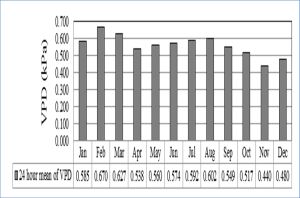 | Fig. 1- The 20-year Malaysia meteorological data and corresponding VPD for each month. |
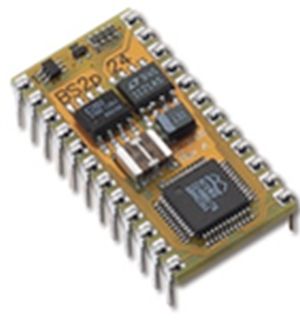 | Fig. 2- BS2P24 microcontroller. |
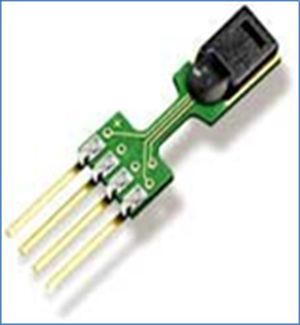 | Fig. 3- SHT11 sensor module. |
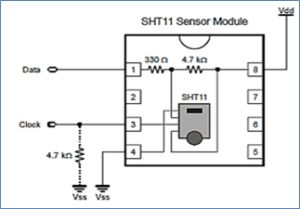 | Fig. 4- Circuit diagram of sensor connections. |
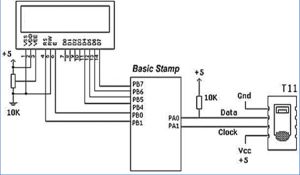 | Fig. 5- Circuit diagram of the data acquisition system. |
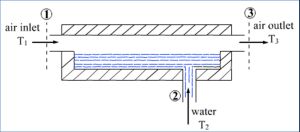 | Fig. 6- Schematic view of a general evaporative cooling system, T2 is less than T1. |
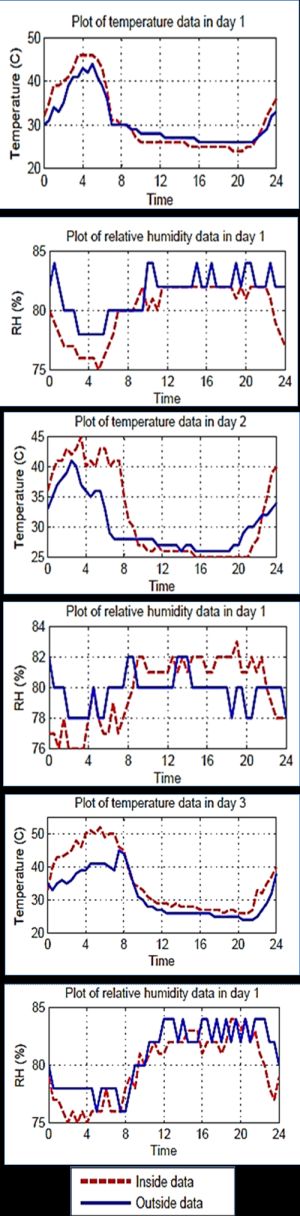 | Fig. 7- Plots of Temperature and relative humidity in three consecutive days from inside and outside of the greenhouse. |
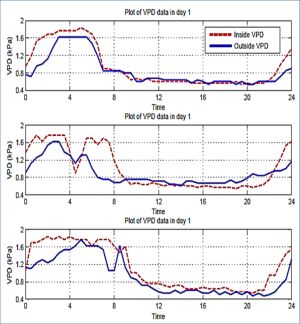 | Fig. 8- Plots of vapor pressure deficit in three consecutive days from inside and outside of the greenhouse. |
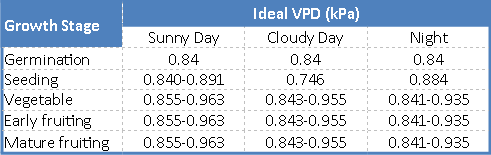 | Table 1- Ideal VPD for the five growth stages of tomato. |
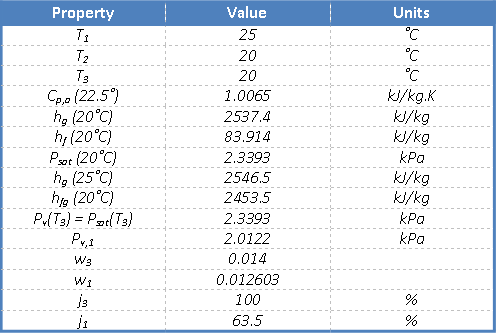 | Table 2- Thermodynamic table for evaporative cooling system shown in figure 6. |
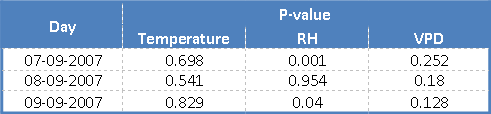 | Table 3- P-values from test statistics of data comparison. |