


ISSN : 2278-9847
EISSN : 2278-9855



BELLO O.B.1*, OLAOYE G.2
1Department of Biological Sciences, Fountain University, Osogbo, Osun State, Nigeria.
2Department of Agronomy, University of Ilorin, Ilorin, Nigeria.
* Corresponding Author : obbello2002@yahoo.com
Received : 30-01-2012 Accepted : 17-07-2012 Published : 19-07-2012
Volume : 1 Issue : 1 Pages : 10 - 13
World Res J Agr Biotechnol 1.1 (2012):10-13
Development of drought-tolerant maize varieties with high and stable yields is very imperative as being affordable alternative to many smallholder farmers. Drought-tolerant maize varieties belonging to two maturity groups (10 early and 10 late/intermediate) were evaluated for yield and other related characters in the southern guinea savannah (SGS) of Nigeria for two years. Days to flowering were higher in the second year than the first year. Consistent number of days (3 days) was recorded for anthesis-silking interval in both years. Plant and ear heights are greater in 2008 than 2007. However, plant and ear aspects were fair in overall phenotypic appeal and grain yield was not significantly difference in both years. Maize grain yield in late/intermediate varieties is significantly higher than the early with a difference of one tonne. High grain yield recorded in two varieties each among the early (AC 90 POOL 16 DT STR and TZE-Y DT STR C4) and late/intermediate (DT-SR-WC0 F2, SUWAN-1-SR-SYN) varieties was approximately 4.6 t/ha. These genotypes could be used either as cultivar per se to escape the prolonged moisture stress during the later part of the cropping season or introgressed with favourable cultivars for high yield adaptable to drought-prone areas in SGS ecologies.
Maize yield, early varieties, late/intermediate, maturing groups.
Maize (Zea mays L.) is an important staple food crops and provide bulk of raw materials for the livestock and many agro-allied industries in the world [5] . Despite its importance, maize grain yield is severely constrained by drought. Drought occurs during or shortly before flowering, the estimated yield loss may be in the range of 21 to 50% [1] . The savannah zone of Nigeria has a great potential for food production, because of its high solar radiation, which favours maize production. In the southern guinea savannah (SGS), maize is grown twice due to bimodal rainfall pattern. The early crop is planted at the onset of the rainy season before the rains are fully established (March/ April), while, the late season crop is planted during the second cycle of rains (July/August). However, while the short early seasoned is usually characterized by abrupt cessation of rains during crop cycle, the late season is usually characterized by terminal drought. The soil is also fragile with low organic matter, poor buffering and water holding capacity, resulting in low nitrogen availability [8] . Since the timing of mid-season drought is unpredictable, early maize cultivars that can tolerate the effects of reduced moisture supply around flowering could reduce farmers’ risk in drought-affected ecologies [9] . Farmers grow early maturing varieties not only to provide an early harvest to bridge the “hungry-season†before harvest of a full-season crop, but also ideal for off-season plantings in drying riverbeds. Early varieties are ideal for intercropping by providing less competition for moisture, light, and nutrients than later maturing varieties. They also offer flexibility in planting dates, which enables: (i) multiple plantings in a season to spread risk of losing a single crop to drought (ii) late plantings during delayed onset of rainfall, and (iii) avoidance of known terminal drought periods during the cropping season [6] . In view of the looming water crisis in most parts of WCA, production and utilization potential of maize in the recent times is not only attracting the attention of the national and international research trusts with the view to developing short early season cultivars endowed with favourable genes for high yield potential and stability across a broad range of water availability. Thus, development of early maturing drought-tolerant cultivars that fully explored the potential growing season and fitting the constraints of the local environment is prerequisite to stabilizing maize yields. The present study is therefore conducted to evaluate the performance of selected early and late/intermediate DT maize varieties for grain yield potential and earliness with the view to identifying promising candidates that could be used in future development of productive cultivars adapted to drought in the SGS ecology.
Drought-tolerant maize varieties belonging to two maturity groups (early and late/intermediate) were selected from a set of DT maize inbred lines from the International Institute of Tropical Agriculture (IITA) Ibadan, Nigeria. The varieties were evaluated for two years (2007 and 2008) during late cropping seasons at the Lower Niger River Basin Authority station, Oke-Oyi, Ilorin, Nigeria (Latitude 80 30’N, 80 36’E and Longitude 40 31’N, 40 33’E). The physico-chemical characteristics of the soil of the experimental site are shown in [Table-1] . The soil texture is loamy sand. At 0-15cm depth, the amounts of silt, sand and clay were 19, 72 and 6 reÂspectively, with soil pH = 6 and ECEC = 11.90 (C. mol kg-1). The trial was laid out in a randomized complete block design (RCBD) with four replications. The materials were planted in 4-row plots, 5m long, with 0.75m spacing between rows and 0.5m spacing between plants. Within a row, three seeds were planted in a hill and thinned to two plants after emergence to attain a population density of 53,333 plant ha-1. NPK 20-10-10 fertilizer was applied at the rate of 80 kg N ha-1 in 2 equal doses immediately after thinning and two weeks before anthesis. Weed control was done chemically by use of 5 litres per hectare pre-emergence herbicides (a.i. 3kg/l Metolachlor and 170g/l Atrazine). This was supplemented by a regime of hand weeding 6 weeks after planting. Data were collected from the two middle rows in each plot. The parameters measured included: Days to anthesis (DAN) and silking (DSK) were recorded as the number of days from planting to when 50% of the plants in each plot shed pollen and had emerged silks, respectively. Anthesis-silking interval (ASI) was computed as the difference between dates of silking and pollen shed. Plant (PHT) and ear heights (EHT) were measured as the distance (cm) from the base of the plant to the height of the first tassel branch and the node bearing upper ear respectively. Plant aspect (PAS) was rated on a scale of 1 to 5 where 1 = excellent overall phenotypic appeal and 5 = poor overall phenotypic appeal. Ear aspect (EAS) was also rated visually on a scale of 1 to 5 where 1 = clean, uniform, large and well-filled ears and 5 = variable, small and partially filled ears. The total number of plants and ears were counted in each plot at the time of harvest. The number of ears per plant (EPL) was then calculated as the proportion of the total number of ears harvested divided by the total number of plants in a plot. All ears harvested from each plot were shelled to determine percentage moisture at harvest. Grain yield (GYD) was adjusted to 15% moisture and used to compute grain yield in tonnes per hectare (t/ha). Data collected were subjected to combined ANOVA across years using Genstat (Genstat, 1995). Mean squares were computed for all agronomic and yield related characters, while significant differences were determined with Least Significant Difference.
The release of improved drought-tolerant maize varieties by the research institutes has sparked optimism for increased maize productivity in the savannah ecologies. These could not only be achieved by promoting the rate of adoption of improved maize cultivars by the farmers, but also provide farmers with opportunities to overcome the challenges to maize production, thereby improving food security in the WCA. The two drought-tolerant maize maturing groups used in this study varied in yield potential in both growing seasons [Table-2] . In the across years, days to flowering was higher in the second year than the first year. This indicates variability among the genotypes in their responses to different climatic changes in both years. This corroborates with earlier observation of Kang (1988) who noted that environment played significant role in phenotypic expression of agronomic characters. The author also insinuated that ignoring environmental component in the fields would likely reduce progress and advances in selection. The upshot is that climatic (rainfall, relative humidity, sunshine, etc.) variation is an important factor in the expression of grain yield. Consistent number of days (3 days) was recorded for anthesis-silking interval in both years. This indicates an interval of 3 days between pollen shed and silk intrusion in the genotypes. Bello and Olaoye (2009) described anthesis-silking interval as a measure of nicking (synchronization) of pollen shed with silking. The authors also observed that anthesis-silking interval is a trait used mostly in screening genotypes for tolerance to stresses. Consequently, anthesis-silking interval has been reported to be a valuable diagnostic trait for cultivar performance under stress than days to silking per se [9] , since it is largely independent of maturity differences among cultivars. The number of ears per plant decreased significantly as ASI increased, and this trait was a major factor that contributed to differences between the top and lowest yielding genotypes under drought stress [7] . However, plant and ear heights are greater in 2008 than 2007. This indicates that the climatic condition (rainfall) in the second year cropping season was favorable and resulted to higher plant and ear heights. This result also showed that plant and ear heights not only depend on the genetic background of the varieties, but also influenced by environmental effects such as rainfall and sunshine among others. Many researchers have reported on the importance of plant and ear heights in maize production. Park et al., (1989) suggested that due to increased plant density, plant and ear height may increase as the plant compete for light, while taller plants attached with more leaves need a larger growing area and lower plant density compared with shorter one [3] . Manson et al., (1974) noted that dry matter yield showed a significant positive correlation to plant and ear heights, while Baktash and Mazaal (1985) is of the view that plant and ear heights are principally determined by the type of variety and sowing date. On the other hand, plant and ear aspects were fair in overall phenotypic appeal and grain yield was not significantly difference in both years. This indicated that the genotypes were not greatly affected with prevalent diseases. Also, maize grain yield in late/intermediate varieties is significantly higher than the early with a difference of one tonne. This result showed that grain yield not only depend on the genetic background of the genotypes, but also on the duration of maturity. Therefore, long period of maturity enables for a long duration in metabolic transformation into grain yield and stover. This underscores the earlier view of Kamara et al., (2009) who noted that early flowering maize plants are smaller and have fewer leaves with low grain yield compared with late cultivars. The authors further accentuated that the preponderance of intermediate and late-maturing cultivars with high yield is understandable, since genotypes that take a longer period to mature usually yield higher. Meanwhile, among early and late/intermediate individual means [Table-3] , TZE-Y DT STR C4, TZE-W DT STR C4, AC 90 POOL 16 DT STR and local check “AFO†combined earliness with high grain yield in the early cultivars, These varieties that flowered and matured earlier with high yield could be used to escape the prolonged moisture stress during the later part of the cropping season. They could also be introgressed into other proven cultivars for high grain yield and earliness. In this study, plant height ranged from 166cm to 169cm in early cultivars and in the late/intermediate, between 168cm and 177cm was recorded. It is observed that early varieties had low plant height compared to late/intermediate varieties. Yamakawa et al., (2006) reported that plant height is very important for breeding of new varieties of maize, for green and dry matter production, and even for grain yield. The authors further stressed that plant height is not only controlled by the expression of many genes, but also the interactions between these genes. Although similar trend of ear height was also recorded in both early and late/intermediate varieties in which most of the early varieties were short-heighted compared to late/intermediate with high heights. Ear height has also been described to be one of the most important selection criteria in most breeding programme especially the root and stock lodging. High ear position could be susceptible to root and stock lodging, therefore the plant breeders usually prefer selecting for lower ear position in maize. Based on the yield performance in the two maturing groups, high grain yield was recorded in two varieties each among the early (AC 90 POOL 16 DT STR and TZE-Y DT STR C4) and late/intermediate (DT-SR-W C0 F2, SUWAN-1-SR-SYN) varieties with approximately 4.6 t/ha. Therefore, these genotypes that combined earliness with high yield could be used either as cultivar per se to escape the prolonged moisture stress during the later part of the cropping season or serve as potential sources of unique combinations of favourable alleles for developing high yielding varieties adapted to drought-prone areas in SGS ecologies.
[1] Ashley J. (1999) Food Crop and Drought. In. CTA Macmillan Education Limited, London and Basingtoke. 133.
» CrossRef » Google Scholar » PubMed » DOAJ » CAS » Scopus
[2] Baktash F.Y., and Mazaal A.D. (1985) J. Agr. Water Resources Res., 4, 1-11.
» CrossRef » Google Scholar » PubMed » DOAJ » CAS » Scopus
[3] Begna S.H., Hamilton R.I., Dwyer L.M., Stewart D.W. and Smith D.L. (2000) Variability among maize hybrids differing in canopy architecture for above-ground dry matter and grain yield. Maydica, 45, 135-141.
» CrossRef » Google Scholar » PubMed » DOAJ » CAS » Scopus
[4] Bello O.B. and Olaoye G. (2009) African Journal of Biotechnology, 8(11), 2518-2522.
» CrossRef » Google Scholar » PubMed » DOAJ » CAS » Scopus
[5] Bello O.B., Abdulmaliq S.Y., Afolabi M.S. and Ige S.A. (2010) African Journal of Biotechnology, 9(18), 2633-2639.
» CrossRef » Google Scholar » PubMed » DOAJ » CAS » Scopus
[6] CIMMYT (2000) Research highlights. Harare, Zimbabwe.
» CrossRef » Google Scholar » PubMed » DOAJ » CAS » Scopus
[7] Edmeades G.O., Bolaños J., Lafitte H.R., Rajaram S., Pfeiffer W. and Fischer R.A. (1989) Drought Resistance in Cereals., 27-52.
» CrossRef » Google Scholar » PubMed » DOAJ » CAS » Scopus
[8] Fakorede M.A.B., Badu-Apraku N., Coulibaly O. and Fajemisin J.M. (2001) Maize research and development priorities in sub-saharan African in the next millennium., 31-58.
» CrossRef » Google Scholar » PubMed » DOAJ » CAS » Scopus
[9] Fischer K.S., Johnson E.C., Edemeades G.O. (1983) International Maize and Wheat Improvement Centre.
» CrossRef » Google Scholar » PubMed » DOAJ » CAS » Scopus
[10] Fischer K.S., Edemeades G.O., Johnson E.C. (1989) Field Crops Research, 22, 227-243.
» CrossRef » Google Scholar » PubMed » DOAJ » CAS » Scopus
[11] Genstat (1995) Genstat 5 release 3.2. Reference manual supplement. Clarendon Press, Oxford, U.K.
» CrossRef » Google Scholar » PubMed » DOAJ » CAS » Scopus
[12] Kamara A.Y., Friday E., David C. and Lucky O.O. (2009) Agron. J., 101, 91-98.
» CrossRef » Google Scholar » PubMed » DOAJ » CAS » Scopus
[13] Kang M.S. (1988) Adv. Agron., 62, 199-252.
» CrossRef » Google Scholar » PubMed » DOAJ » CAS » Scopus
[14] Manson L.C., Mondart L., Chaney C.R., Martin P. and Milam M. (1974) Bull. Agr. Exp. Stat. Louisianns St. Unis., 677, 23.
» CrossRef » Google Scholar » PubMed » DOAJ » CAS » Scopus
[15] Park K.Y., Kang Y.K., Park S.U. and Moon H.G. (1989) Korean J. Crop Sci., 34, 192-197.
» CrossRef » Google Scholar » PubMed » DOAJ » CAS » Scopus
[16] Yamakawa T., Hee C.J.I., Jin-Woong C.H.O. (2006) J. Fac. Agr., Kyushu Univ., 51(2), 233-238.
» CrossRef » Google Scholar » PubMed » DOAJ » CAS » Scopus
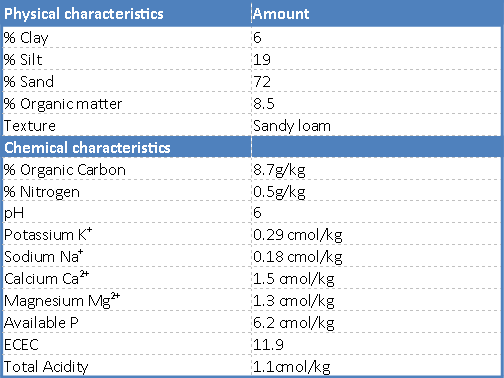 | Table 1- Physico-chemical characteristics of the soil of the experimental site. |
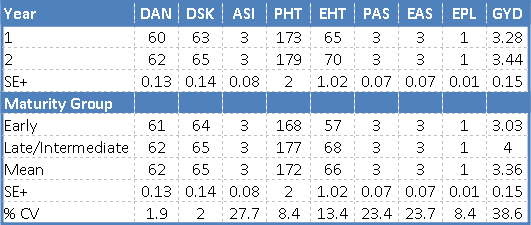 | Table 2- Means of traits and averaged over two years in early and late/intermediate maturing maize varieties groups grown at Oke-Oyi, Nigeria in 2007 and 2008. |
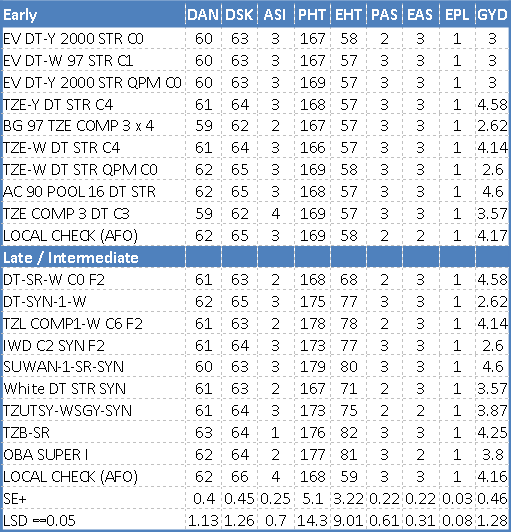 | Table 3- Means of agronomic characters averaged over two years for 10 early and 10 Late/intermediate maturing maize varieties grown at Oke-Oyi, Nigeria in 2007 and 2008. |